“Chinese Academy of Sciences” search results (97)

History of introduction and expansion of Coffee in China in the early stage of Coffee Development (5)
1. From the first peak period of the development of China's coffee industry (1952-1961) to the late 1940s, according to recorded figures, there are 2173.33 hectares of rubber plantations in Hainan Island, with a total of 867600 rubber trees, with an annual output of 199,000 tons of dry rubber, and more than 300,000 coffee plants. the annual output of coffee beans is 1 ton. According to a survey in the early 1950s, there was a large amount of coffee left in Fushan area of Chengmai County, with a total of 70,000.
2015-03-09 China coffee development course early stage introduction expansion
Be on guard against the health risks of those who drink
People are very concerned about how to eat healthily, but they don't realize that drinking incorrectly is also very harmful. The Daily Mail pointed out that drinking coffee, fruit juices, soups and other drinks incorrectly will leave a lot of health risks. Combined with foreign research, Sheng Jun interviewed a number of domestic authoritative experts and summed up the knowledge that Chinese people need to drink. Soup salt is prone to high blood pressure. Soups can not only take into account the taste
2015-09-08 Watch out for those come out health hidden dangers
The introduction of Ruili Jingpo Nongxian coffee was recorded in 1914.
In April 1996, compiled by the compilation Committee of Ruili City Chronicles of Yunnan Province, the fifth coffee section on page 383 of Ruili City Chronicles published by Sichuan Dictionary Publishing House recorded that as early as 1914, the Jingpo nationality had been introduced from Myanmar to Nongxian Township for cultivation. The local series of books of the people's Republic of China, Records of Yunnan Province, Volume 39, Records of Land Reclamation, Chapter 3, Section 2, Coffee is recorded: the cultivation of coffee in China began in 1884.
2015-02-07 About Ruili Jingpeng coffee introduction 1914 records
History of introduction and expansion of Coffee in early China (1)
1. The introduction of Ruili Jingpo Nongxian Coffee was recorded in 1914. In April 1996, it was compiled by the compilation Committee of Ruili City Chronicles of Yunnan Province. The fifth coffee section on page 383 of Ruili City Chronicles published by Sichuan Dictionary Publishing House recorded that as early as 1914, the Jingpo people have been introduced from Myanmar to Nongxian Township for cultivation. Yunnan Provincial Chronicles, Volume 39, Chapter 3 of the Local Series of the people's Republic of China
2015-04-28 Early China coffee introduction expansion about Ruili Jingpeng
The History of Coffee introduction and expansion in China in the early stage (1)
1. The introduction of Ruili Jingpo Nongxian Coffee was recorded in 1914. In April 1996, it was compiled by the compilation Committee of Ruili City Chronicles of Yunnan Province. The fifth coffee section on page 383 of Ruili City Chronicles published by Sichuan Dictionary Publishing House recorded that as early as 1914, the Jingpo people have been introduced from Myanmar to Nongxian Township for cultivation. Yunnan Provincial Chronicles, Volume 39, Chapter 3 of the Local Series of the people's Republic of China
2014-12-01 Coffee history common sense early China introduction expansion about Ruili Jingpolong
History of introduction and expansion of Coffee in China in the early stage of Coffee Development (1)
1. The introduction of Ruili Jingpo Nongxian Coffee was recorded in 1914. In April 1996, it was compiled by the compilation Committee of Ruili City Chronicles of Yunnan Province. The fifth coffee section on page 383 of Ruili City Chronicles published by Sichuan Dictionary Publishing House recorded that as early as 1914, the Jingpo people have been introduced from Myanmar to Nongxian Township for cultivation. Yunnan Provincial Chronicles, Volume 39, Chapter 3 of the Local Series of the people's Republic of China
2015-03-09 China Coffee Development course early introduction expansion about Ruili Jingpeng
Coffee Chain China War
Challenge Starbucks, create teahouse-style cafes, coffee chain China war is imminent. Coffee Chain China War □ Wen/Reporter Tan Jia Chongqing, Guanyinqiao Business Circle. At three o'clock in the afternoon, Cross-Strait Coffee's Future International Store is full of people: ordering food, waiters filling water, cell phones ringing, coffee spoons clashing with ceramic cups, conversation, and jazz music. It's like a cup of rich layers.
2016-09-14 coffee chain national war
Development of Chinese Coffee Market Chinese Coffee starts from Pu'er
What binds Jin Jihui, Alex and Hute to Yunnan is the thousand-year-old tea village Pu'er. This small border town, which has changed its name from Simao to Pu'er because of its famous Pu'er tea, now wants to add another label to its city card, the Coffee Capital of China. In 2007, Jin Jihui, a middle-aged literary and artistic classmate with Jia Jingwen and Xu Jinglei at the Beijing Film Academy, came to Yunnan
2014-11-06 Coffee knowledge Chinese coffee market coffee market development Pu'er
Truth: instant coffee causes cancer? Drinks contain Botox?
1. Drinking instant coffee can cause cancer? instant coffee contains acrylamide, which is highly carcinogenic. A few days ago, an article entitled "you can't drink instant coffee, there are more carcinogens than smoking" spread on the Internet. The article says instant coffee is highly carcinogenic and contains higher concentrations of acrylamide than cakes, French fries, potato chips and cigarettes. [truth] Coffee alone won't
2015-05-23 Truth instant coffee carcinogens drinks meat bacilli
History of introduction and expansion of Coffee in early China (5)
1. From the first peak period of the development of China's coffee industry (1952-1961) to the late 1940s, according to recorded figures, there are 2173.33 hectares of rubber plantations in Hainan Island, with a total of 867600 rubber trees, with an annual output of 199,000 tons of dry rubber, and more than 300,000 coffee plants. the annual output of coffee beans is 1 ton. According to a survey in the early 1950s, there was a large amount of coffee left in Fushan area of Chengmai County, with a total of 70,000.
2015-04-28 Early China coffee introduction expansion
Yunnan small Katim Coffee Bean characteristics, Flavor and taste introduction to the ranking of Coffee producing areas in Yunnan, China
There is a third reason why we have to put in a good word for Nestl é. At that time, leaf rust spread all over the world, and international organizations promoted the cultivation of Katim. To put it beside the point, Colombia is the biggest harvester of the new breed of Katim, and directly put the improved Katim under the national name of Colombia Katim and Katim.
2023-01-01 Tim coffee beans characteristics flavor introduction China Yunnan coffee origin
Coffee planting History of Coffee introduction and expansion in China in the early stage (5)
1. From the first peak period of the development of China's coffee industry (1952-1961) to the late 1940s, according to recorded figures, there are 2173.33 hectares of rubber plantations in Hainan Island, with a total of 867600 rubber trees, with an annual output of 199,000 tons of dry rubber, and more than 300,000 coffee plants. the annual output of coffee beans is 1 ton. According to a survey in the early 1950s, there was a large amount of coffee left in Fushan area of Chengmai County, with a total of 70,000.
2014-10-14 Coffee knowledge coffee growing history Chinese coffee
The History of Coffee introduction and expansion in China in the early stage (5)
1. From the first peak period of the development of China's coffee industry (1952-1961) to the late 1940s, according to recorded figures, there are 2173.33 hectares of rubber plantations in Hainan Island, with a total of 867600 rubber trees, with an annual output of 199,000 tons of dry rubber, and more than 300,000 coffee plants. the annual output of coffee beans is 1 ton. According to a survey in the early 1950s, there was a large amount of coffee left in Fushan area of Chengmai County, with a total of 70,000.
2014-12-01 Coffee History Common sense early China introduction expansion planting Industry
A large number of entrepreneurs are approaching in the era of entrepreneurial coffee 2.0
Although the US capital market has issued a "tech bubble" warning, but the enthusiasm of domestic entrepreneurs is still heating up. After all, there is Facebook before, there is the myth of wealth creation such as Jumei Youpin, etc., this entrepreneurial wave called mobile Internet is really attractive.
2014-06-05 Coffee News Coffee Startup Entrepreneur
How Yunnan Coffee Becomes "Big Coffee"
Just after the frost, Yunnan Pu 'er, Baoshan, Lincang and other major coffee producing areas entered the busiest coffee harvest season. Recently, Yunnan Province Coffee Industry Association held a media meeting in Kunming, revealing that Yunnan coffee production is expected to approach 100,000 tons in the new harvest season. However, because Yunnan coffee does not have a famous brand, resulting in low consumer awareness, trust is not strong,
2014-06-10 Yunnan coffee big coffee transformation
Coffee enema
Coffee enema, it is said that slimming coffee is ineffective, there is no scientific basis, there is no practical proof, drinking coffee to lose weight is blind. Since the above mouth to drink coffee to lose weight can not achieve the goal of coffee weight loss. Some people come up with the following mouth to drink coffee to lose weight, what's wrong with the world! Coffee enema not only needs to use the petty bourgeoisie desire that I am not in the coffee shop but on the way to the coffee shop.
2014-06-28 Coffee enema coffee weight loss caffeine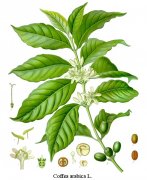
Coffee cultivation techniques detailed explanation of planting knowledge of Coffee trees
Coffee, cocoa and tea are called the three major beverages in the world, and their output, consumption and output value all rank first. In addition to being used as a beverage, coffee can also extract caffeine and coffee oil; in medicine, it can be used as an anesthetic, stimulant and diuretic cardiotonic agent. Coffee pulp can be used to make wine, vinegar, pectin and molasses; dried pulp can be used as animal feed; dried fruit shell can be used as fertilizer and burning
2015-02-16 Coffee cultivation techniques planting knowledge detailed explanation